Floors Built to Handle Food Service Demands
Commercial Kitchen Floor Degreasing and Sanitizing in Atlanta for reducing slip hazards and maintaining health code compliance
Grease accumulation on commercial kitchen floors creates dangerous slip conditions and violates health department standards in food service facilities. Pristine Hood Vent Services provides commercial kitchen floor degreasing and sanitizing in Atlanta for restaurants, cafeterias, schools, healthcare facilities, and other operations where cooking activity deposits oil and fat residues on walking surfaces. Professional-grade equipment and commercial degreasers break down layers of buildup that standard mopping cannot remove, restoring traction and visible cleanliness to heavily used floor areas.
The degreasing process involves applying concentrated cleaning agents designed to dissolve oil-based residues, agitating surfaces with mechanical scrubbers to lift embedded grime, and extracting both the cleaning solution and suspended grease through wet vacuum recovery. High-traffic zones near fryers, ranges, and prep stations accumulate the thickest layers of grease, often requiring multiple passes to restore the original floor texture and eliminate the slick film that develops from airborne cooking oil settling on horizontal surfaces.
Schedule floor degreasing alongside your regular hood cleaning service to maintain consistent kitchen safety standards.
What Changes After Professional Floor Degreasing
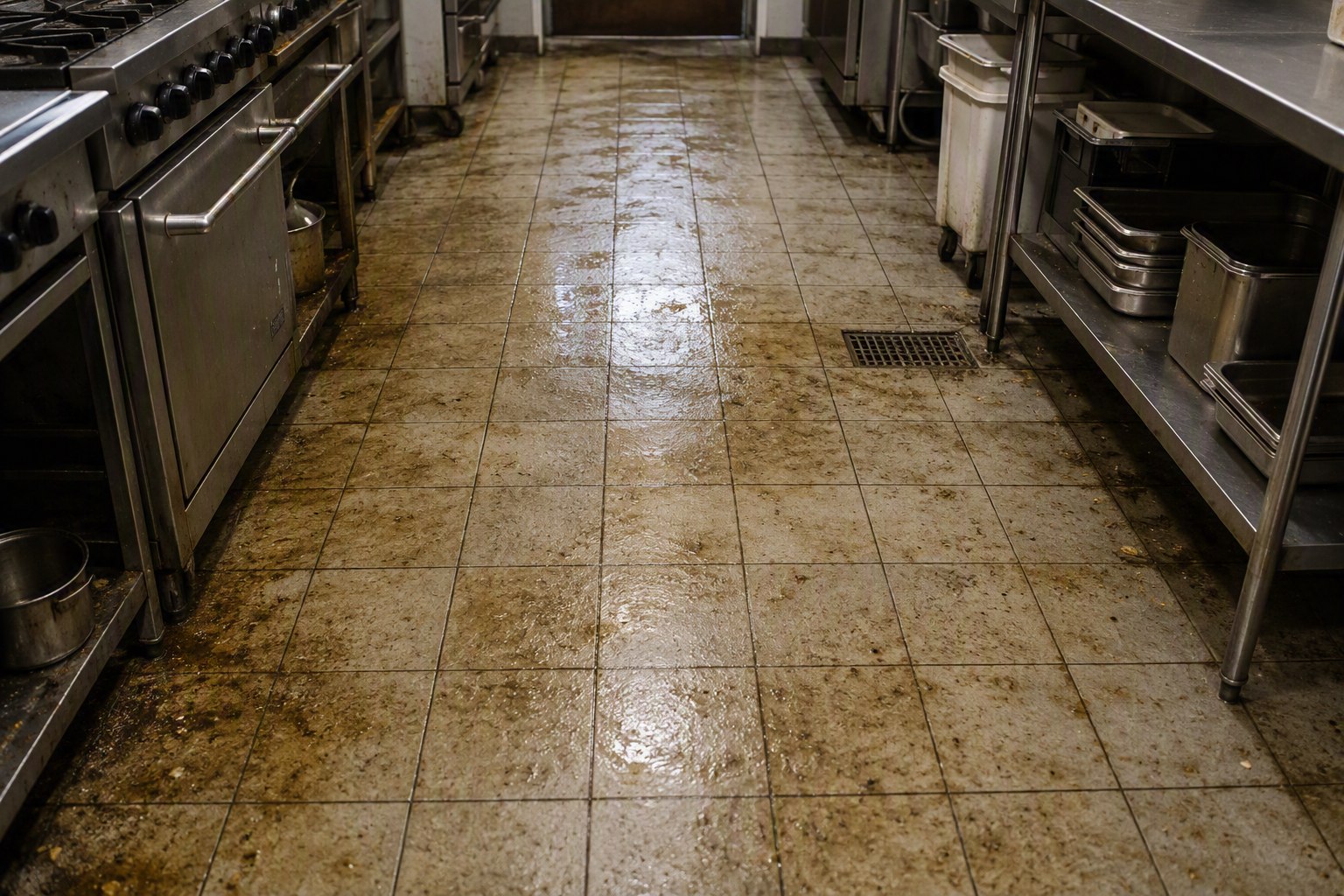
Professional degreasing removes the greasy film that causes footwear to slide rather than grip during normal walking, particularly in areas where staff carry hot liquids or heavy cookware. The mechanical scrubbing action reaches into grout lines and textured floor surfaces where grease embeds over time, areas that mop heads cannot adequately clean because they simply spread diluted grease rather than removing it from the substrate.
After degreasing and sanitizing, you notice immediate traction improvement when walking across previously slippery zones, and the floor appears visibly lighter in color as years of darkened grease layers are stripped away. Kitchen staff report greater confidence moving quickly during service rushes, and the persistent greasy odor that develops in inadequately cleaned kitchens diminishes as the bacterial growth feeding on organic residues is eliminated through sanitization.
This service addresses both the safety liability of slip-and-fall incidents and the health code violations that occur when inspectors observe grease buildup on floors during routine visits. Combining floor degreasing with hood system cleaning creates a comprehensive maintenance approach, since both services target the same grease deposits that migrate throughout the kitchen environment during cooking operations.
What Food Service Operators Usually Ask
Facility managers and kitchen supervisors frequently have questions about scheduling this service and what results to expect in high-volume cooking environments.
How does professional degreasing differ from daily mopping?
Daily mopping dilutes surface grease and moves it around, but lacks the chemical concentration and mechanical agitation needed to break down polymerized oil layers that bond to flooring materials over weeks of exposure to heat and cooking fumes, whereas professional degreasing uses alkaline cleaners at strengths not available in retail products combined with rotary scrubbers that physically remove bonded residues.
What types of flooring materials can be degreased safely?
Sealed concrete, quarry tile, commercial vinyl, and epoxy floor coatings all respond well to professional degreasing methods, though the chemical formulation and scrubbing intensity are adjusted based on surface porosity and finish durability to avoid damaging grout or wearing through protective sealers.
How often should commercial kitchens schedule floor degreasing?
High-volume operations with continuous fryer use typically benefit from quarterly degreasing, while lower-volume facilities may maintain adequate safety and cleanliness with semi-annual service, though visible grease accumulation or increased slip incidents indicate the need for more frequent attention regardless of calendar intervals.
Can floor degreasing be performed during operating hours?
Most facilities schedule this service during closed hours or slow periods because floors remain wet during the process and require drying time before safe foot traffic can resume, typically two to four hours depending on ventilation and the extent of cleaning required.
Does this service help with health inspection readiness?
Removing visible grease buildup from floors addresses one of the most common inspection violations in Atlanta food service facilities, and the sanitizing step reduces bacterial counts on surfaces that come into contact with dropped utensils or ingredients, contributing to overall scores during regulatory visits.
Pristine Hood Vent Services coordinates floor degreasing with your existing hood cleaning schedule to minimize service visits and maintain comprehensive kitchen cleanliness. Request a customized estimate that addresses your facility's specific floor conditions and traffic patterns.